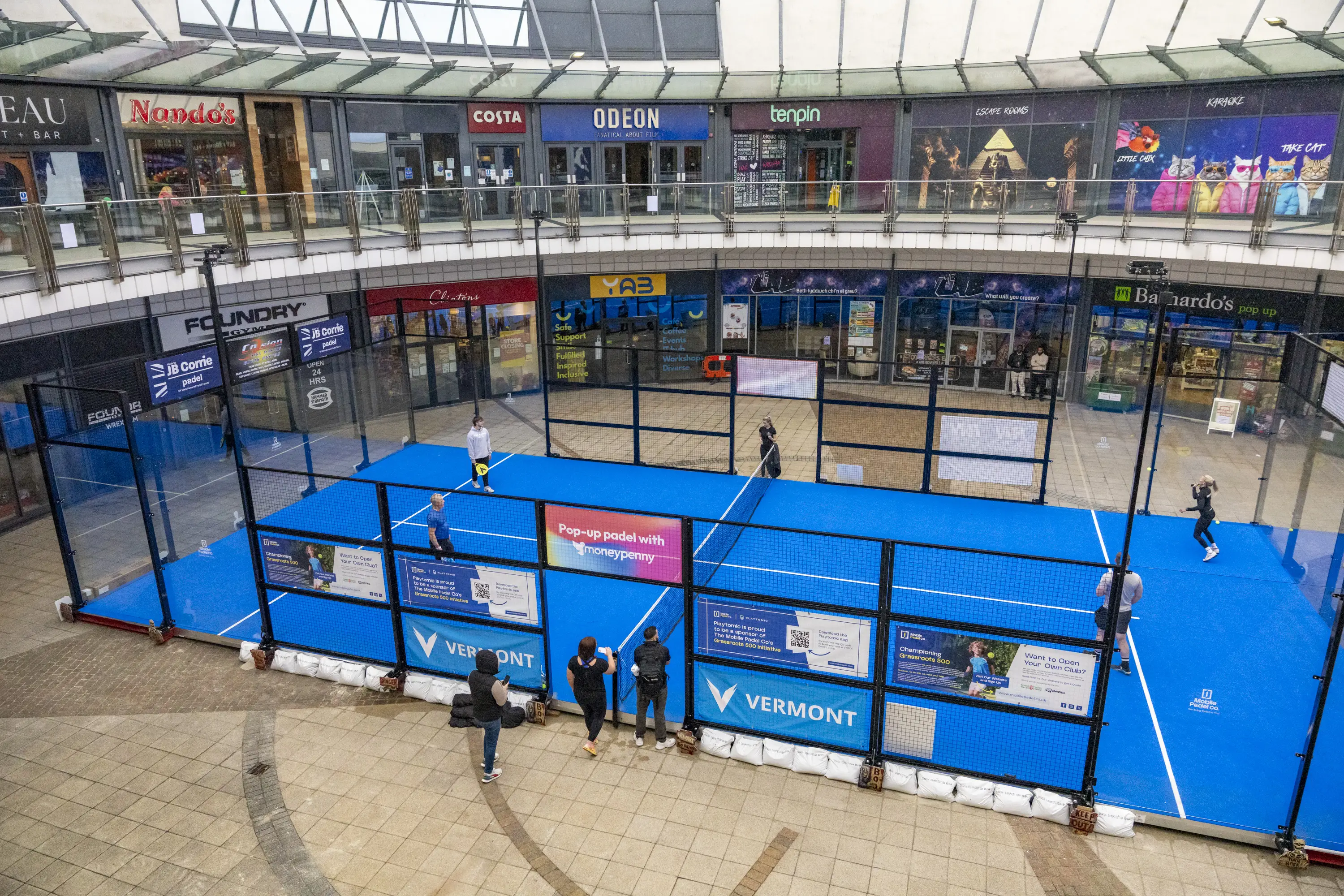
Padel is no longer a niche sport. It’s one of the fastest-growing activities in the UK and across Europe, with participation increasing month after month and demand for courts consistently outstripping supply. As more players discover the sport’s social, fast-paced appeal, businesses are recognising that padel presents a new wave of padel commercial opportunities.
From sports clubs and leisure centres to hotels, landowners, and private investors, padel is becoming an attractive investment with strong revenue potential. And with mobile and portable court solutions now available, entering the market has never been easier for those exploring padel business opportunities.
Why Padel Is Growing So Quickly
Padel’s surge in popularity is driven by several key factors:
- Inclusive and accessible: easy for beginners yet exciting for advanced players.
- Fast, fun, and social: matches are short, energetic, and inherently doubles-based.
- Broad appeal: families, students, corporate groups, and performance players all participate.
- High visibility: boosted by influencers, elite athletes, and media coverage.
- Rapid UK facility expansion: new courts appearing nationwide to meet rising demand.
Padel hits the sweet spot between accessibility and sustained repeat play, making it a commercially powerful addition for many venues, particularly as padel court demand in the UK continues rising.
Market Growth Snapshot
A quick look at the current landscape:
This sustained growth is driving businesses to act quickly while the market is still developing, especially those considering padel investment UK.

Business Opportunity #1 – Adding Padel Courts to Existing Sports Facilities
Sports clubs, tennis clubs, gyms, and leisure centres are among the earliest adopters, and for good reason:
- Increased footfall and memberships from a wider customer base.
- New revenue from pay-to-play sessions, coaching, and hire packages.
- A modern attraction that appeals to younger demographics.
- Limited competition in many regions, especially outside major cities.
For venues with under-used outdoor space, padel offers one of the highest returns per square metre of any recreational activity, making it an ideal padel court business model.
Business Opportunity #2 – Hotels, Resorts & Holiday Parks
Padel is becoming a differentiating feature for hospitality and leisure destinations:
- A premium experience that adds value to guest stays.
- Ideal for multi-activity holidays, especially family-focused parks.
- Encourages longer bookings and repeat visits.
- Appealing to corporate retreat groups looking for active team experiences.
Destination venues can also run tournaments, social events, and coaching programmes to increase engagement.
Adding a fixed canopy can extend playable hours year-round - particularly valuable for UK weather conditions.
Business Opportunity #3 – Landowners & Outdoor Spaces
Padel provides a new way for landowners to generate income from unused or under-utilised areas:
- Mobile padel courts reduce planning hurdles due to lighter foundations.
- Seasonal or temporary installations are possible for low-risk testing.
- Pop-up padel venues can operate with flexible business models: daily hire, membership, events, or partnerships with coaches.
It’s a practical option for festival grounds, event sites, vacant plots, or semi-permanent leisure areas.
Business Opportunity #4 – Entrepreneurs & New Ventures
Entrepreneurs are increasingly launching dedicated padel venue business concepts, including:
- Standalone padel clubs with two to eight courts.
- Multi-court complexes featuring coaching, pro-shop retail, recovery zones, and social spaces.
- Corporate entertainment venues combining padel with food, drink, and team-building experiences.
This sector is attracting considerable interest from investors due to strong recurring revenue and broad market appeal.
Business Opportunity #5 – Education Sector
Schools, colleges, and universities are also embracing padel for:
- Student engagement and wellbeing programmes
- Community outreach and partnership opportunities
- Equipment hire and court revenue outside curriculum hours
- Creating modern sporting facilities that attract prospective students
With compact footprint requirements, padel fits well on multi-use sports grounds.
Why Mobile / Portable Padel Courts Lower the Barrier to Entry
Portable and semi-portable padel courts are accelerating adoption across the UK:
- Faster installation, often in days rather than weeks.
- Less invasive foundations, reducing planning complexity.
- Ideal for seasonal events, short-term leases, or testing demand.
- A low-risk entry model for businesses unsure about long-term space.
- Flexible for expansion, relocation, or multi-site partnerships.
This flexibility is helping more businesses assess feasibility before committing to permanent builds, and is particularly useful for those researching how to start a padel business.
How Mobile Padel Supports New Business Ventures
Mobile Padel plays an active role in enabling new padel facilities across the UK by providing:
- UK-engineered fixed and mobile court systems
- Structural engineering-led design for durability and safety
- Experience delivering for sports venues, holiday parks, and private operators
- Maintenance and aftercare packages
- Consultation for multi-court layouts, land use, and operational planning
The full range of fixed, mobile and floating court systems, with the considerations for each, is set out on our court range page.
Frequently Asked Questions

“Padel is one of the rare sports that offers both accessibility and strong commercial viability,” adds [Carrera Sephton, Business Development Manager/Co-Founder, Mobile Padel].
“We’re only at the beginning of the UK’s padel journey, early movers stand to gain the most as momentum accelerates.”
Conclusion
Padel’s explosive growth is creating one of the most exciting commercial opportunities in the UK leisure sector. With rising participation, strong demand for courts, and multiple ways to generate revenue, businesses across sport, hospitality, education, and land development are now exploring how padel fits into their long-term strategy. Our padel court solutions for commercial venues, residential properties and schools cover what each setting involves.
Whether you're a commercial operator, a residential landowner, or a school or community, mobile and portable courts remove many of the traditional barriers to entry, making it easier than ever to test or launch a new padel venture.
To explore padel opportunities for your site, speak to the Mobile Padel team for guidance and feasibility advice. Please feel free to give us a call on 07341295300 or email us on sales@mobilepadel.co.uk .
